Kirkland Habitat 2026 Winter Newsletter
Dear Kindred Community,
As we appreciate more than a week of winter sunshine, let's plant ideas like seeds for the year ahead. Hope for healthy natural systems lies with YOU, and your efforts to adopt eco-friendly practices will likely make you happier and our community healthier!
|
|
Fabric of Living Systems
Let's appreciate the life support provided by natural systems by connecting with nature in our yards, neighborhoods, and natural areas. Fortunately, wild nature is remarkably resilient when given the chance in urban landscapes where human structures and activities have often displaced or harmed living systems.
Let's help to heal and rebalance the harms inflicted on our landscapes, and in return nature will reward us with clean air and water, and delights such as butterflies and birdsong. Our yards, open spaces, and balconies can all be made more habitat friendly and result in healthier natural systems to benefit us all.
"The greatest hope in the short-term lies in grassroots re-wilding - individual, household, neighborhood, and community action to achieve the rebalance" (Christopher Brown. A Natural History of Empty Lots: Field Notes from Urban Edgelands, Back alleys, and Other Wild Places. 2024.)
"Restore it and they will come". When you plant native, you encourage the success of countless plants, animals, and insects in a cycle of renewal that spreads across yards, communities, and ecosystems.
We can bring new meaning to what it means to be a community; one that supports both people and the natural world.
A few examples of eco-friendly practices:
- Leave old leaves, seedbeds, and stems for overwintering wildlife. This includes habitat for insect predators that are our natural pest control - think ladybugs 🐞, spiders 🕷️, and beetles 🪲 that need to survive winter. They will control garden pests such as aphids, spider mites, and mosquitoes - all without the use of toxic pesticides.
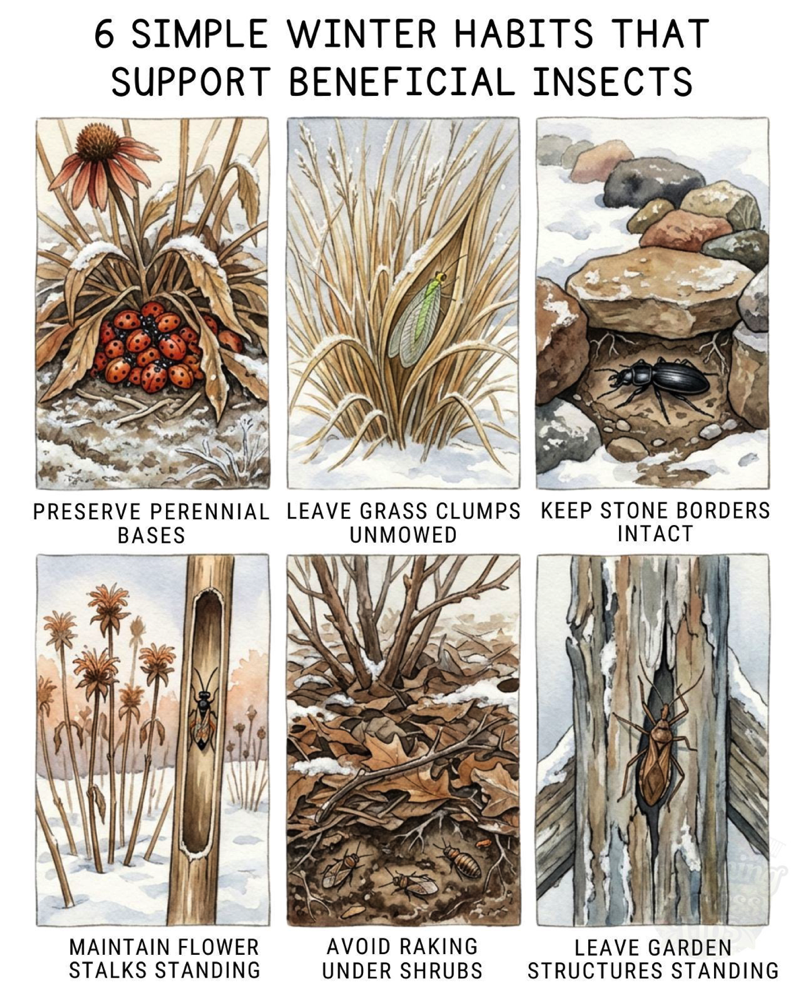 Overwintering beneficial insects that will control pests - Gardening Success Tips
Expand native plant diversity. Plan to grow a variety of native plants you haven't tried before, even in pots on a balcony or deck.
Experiment with different colors, textures, and plant sizes for visual appeal to you and wildlife.
Use natural or "green" mulch like leaf litter in planting beds and around trees and shrubs.
Walk quietly in a natural park to increase feelings of appreciation, connection, and wellness. We are more likely to protect things we love and value.
Trees Are Even More Crazy Than We Thought?
Here's a light-hearted, animated video for your potential entertainment:
https://youtu.be/pHJIhxZEoxg?si=W6gRs4Ddo7UFbfax
Concluding Thoughts
Sign up for Kirkland Conserves for further ideas, and consider volunteering for the Green Kirkland Partnership to restore natural parkland.
From your friendly community supporters,
Kirkland Community Wildlife Habitat Team (Kirkland Habitat)
Sharon Rodman with Aly, Ann, Ash, Marilee, Meredith, Rebecca, Yelena
Please like or follow us on Facebook
Kirkland's Community Wildlife Habitat Program strives for each person
to make our community healthier for people and wildlife.
We encourage residents to certify their properties to show support for
wildlife-friendly activities: https://www.nwf.org/certifiedwildlifehabitat.
Appreciating and enhancing habitat in Kirkland, which is situated on the
ancestral, unceded land of the Puget Sound Salish people; we
acknowledge and honor the land with gratitude.
If you want to unsubscribe from these newsletters, reply to this message
with your request.
Click here for a list of similar postings